Seinfeld Cast Ages in Season 1: George Was 29, but Elaine Arrived Later
When Seinfeld premiered on July 5, 1989, Jerry Seinfeld was 35, Jason Alexander 29, and Michael Richards 39. Elaine was absent: Julia Louis-Dreyfus joined on May 31, 1990, at 29.
Seinfeld cast at each actor's first broadcast appearance
| Actor / birthday source | Role / reference date | Age |
|---|---|---|
| Jerry SeinfeldBorn | Jerry Seinfeld · The Seinfeld Chronicles | 35 |
| Jason AlexanderBorn | George Costanza · The Seinfeld Chronicles | 29 |
| Michael RichardsBorn | Cosmo Kramer · The Seinfeld Chronicles | 39 |
| Julia Louis-DreyfusBorn | Elaine Benes · The Stake Out | 29 |

The familiar image of Seinfeld is four people sharing one apartment and one long argument. The first season did not begin with those four people together. It began with a pilot in 1989, followed by four more episodes in 1990. That gap is the reason a reliable cast-age answer needs more than the words “season 1.”
The table uses each performer's first broadcast appearance. For Jerry Seinfeld, Jason Alexander, and Michael Richards, that is July 5, 1989. For Julia Louis-Dreyfus, it is May 31, 1990. The different dates are deliberate and visible, rather than folded into a misleading single-day group portrait.
George was 29, then turned 30 before the rest of season 1
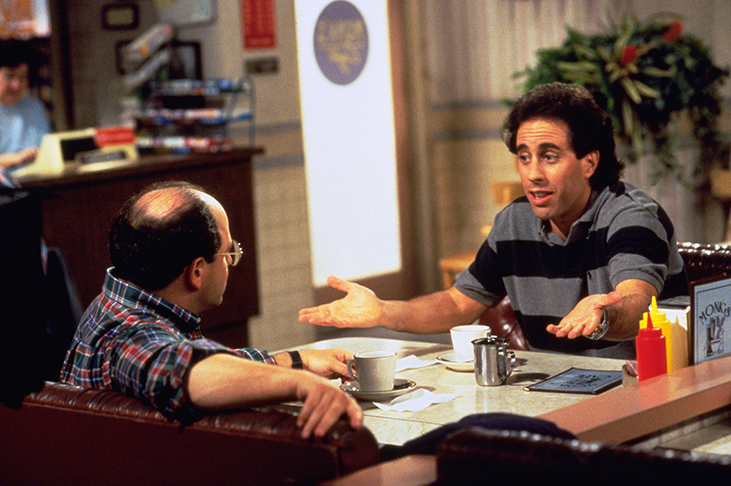
Jason Alexander was born September 23, 1959. He was 29 when the pilot aired and 30 when the show returned the following May. The frequently repeated “George was only 29” observation is accurate for the premiere, but it does not cover every episode in that first season.
The surprise is understandable. Alexander gives George an established store of grievances, and the styling does little to suggest someone just out of his 20s. But the birthday belongs to Alexander. It does not prove that George Costanza has the same age, just as a fictional friendship dating back to school does not require the actors to have been classmates.
Jerry was 35 at the premiere, rather than 34
Jerry Seinfeld's birthday is April 29, 1954. By July 5, 1989, he had turned 35. An answer of 34 may be using an earlier production date, but it cannot describe his age when the pilot originally aired.
That distinction is particularly easy to lose because the lead character shares the comedian's name. The real Jerry's birthday is a biographical fact; the fictional Jerry's chronology is something the episodes establish. Our table describes the performer. It leaves the character's offhand references to age where they belong: in the story.
Elaine was not in the pilot at all
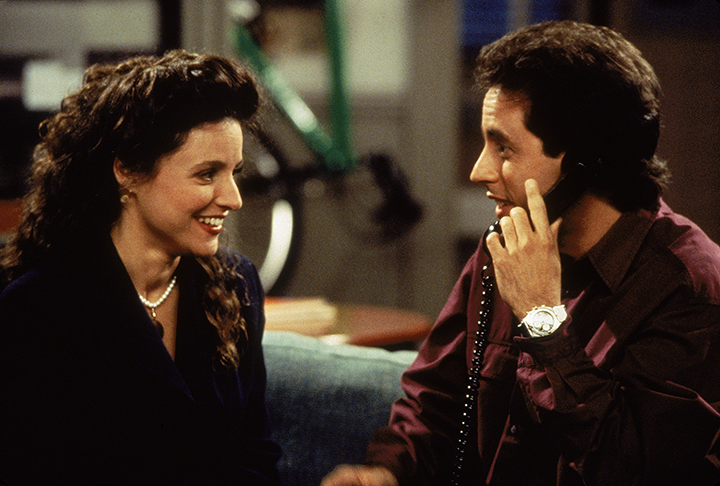
The Paley Center's pilot archive lists Lee Garlington as Claire, alongside Jerry, George, and the neighbor still called Kessler. It does not list Elaine. Julia Louis-Dreyfus enters with The Stake Out, which first aired May 31, 1990, when she was 29.
Her absence is more interesting than a missing name in a table. The eventual quartet seems inevitable after years of reruns, but the pilot had a different arrangement. A comparison that puts Louis-Dreyfus in the pilot cast erases the casting change that helped create the group viewers remember.
Kramer crossed 40 between the pilot and the series return
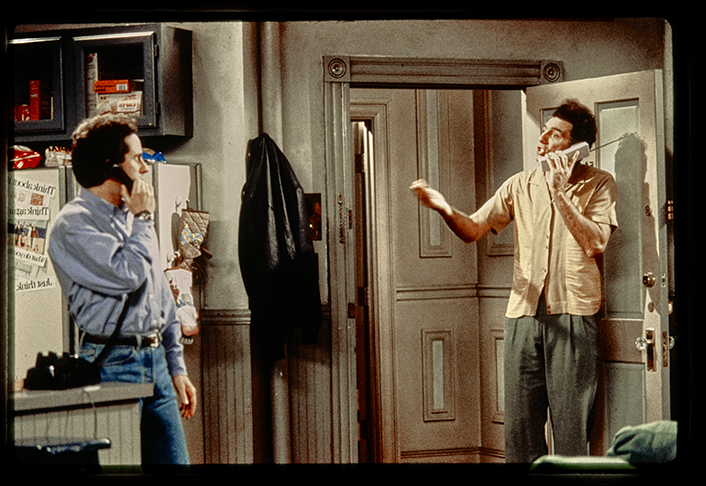
Michael Richards was born July 24, 1949. He was 39 at the pilot broadcast, less than three weeks from turning 40. By the time Elaine appeared the following year, he was already 40. That is another reason the first season cannot be reduced to one unqualified cast-age range.
The character's physical energy can disguise the difference between Richards and his costars. Kramer is older than George's actor, yet often seems less burdened by ordinary adult concerns. The number makes that contrast visible; it does not explain away the writing or turn a performance into a biological rule.
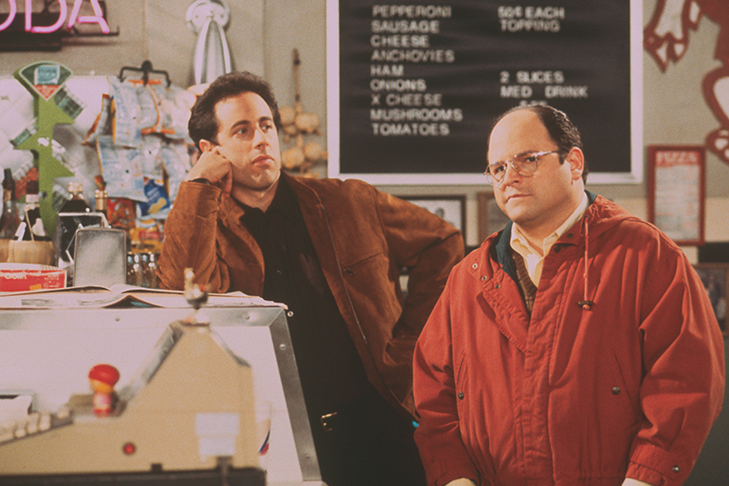

To compare everyone on one date, choose a particular broadcast in the Seinfeld episode age guide. First-appearance ages answer when each performer arrived. A shared episode date answers how old the actors were together. Keeping those questions separate makes both comparisons stronger.
Questions about these ages
How old was Jerry Seinfeld when the show started?
Jerry Seinfeld was 35 when The Seinfeld Chronicles aired on July 5, 1989. He was 36 when the series returned with The Stake Out on May 31, 1990.
Was Jason Alexander really 29 in Seinfeld season 1?
Yes. Jason Alexander was 29 at the July 5, 1989 pilot broadcast. He turned 30 in September, before the remaining first-season episodes aired in 1990.
How old was Julia Louis-Dreyfus when Elaine joined?
Julia Louis-Dreyfus was 29 when The Stake Out aired on May 31, 1990. Elaine was not in the 1989 pilot, so her first-appearance age uses a different date.
How old was Michael Richards in early Seinfeld?
Michael Richards was 39 at the pilot broadcast, just before his July 24, 1989 birthday. He was 40 when the remaining season 1 episodes aired in 1990.
Sources and methodology
Ages are completed birthdays on the original US air date shown in the table, calculated from the linked biographical birth dates. They are actor ages, separate from fictional character ages. Production estimates are not used as exact filming dates. Interpretation of the performances is editorial commentary.
Sources and date notes
The linked actor names in the table lead to the biographical birth-date references. These sources establish the broadcast and casting context:
- Paley Center: The Seinfeld Chronicles — July 5, 1989 broadcast and original pilot cast, including Kessler and Claire.
- TVmaze: Seinfeld episode guide — The Stake Out aired May 31, 1990; season 1 spans two calendar years.
- Seinfeld season 1 history — The pilot and subsequent four episodes belong to the same first season.
Explore Seinfeld cast ages by episode